The pieces
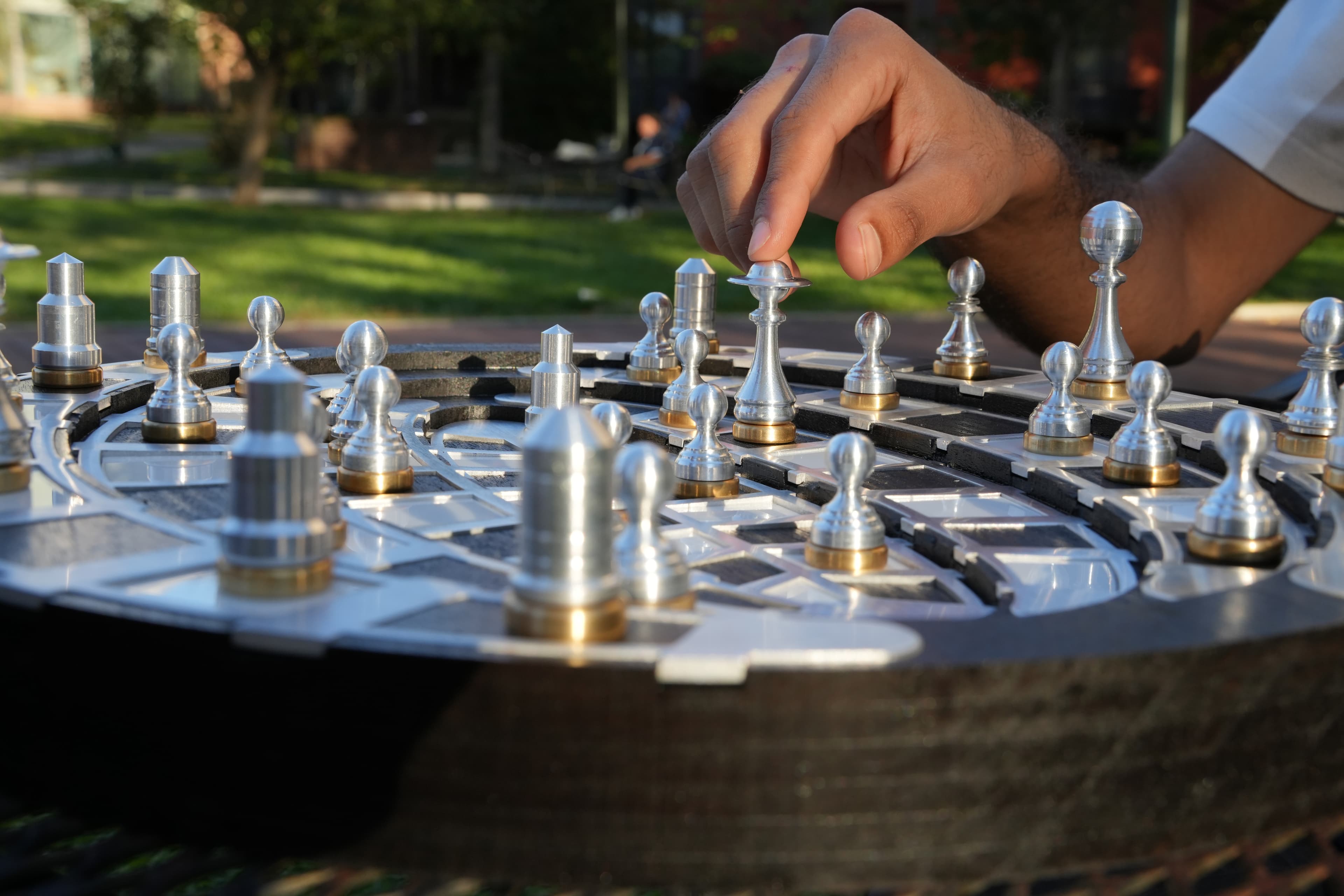
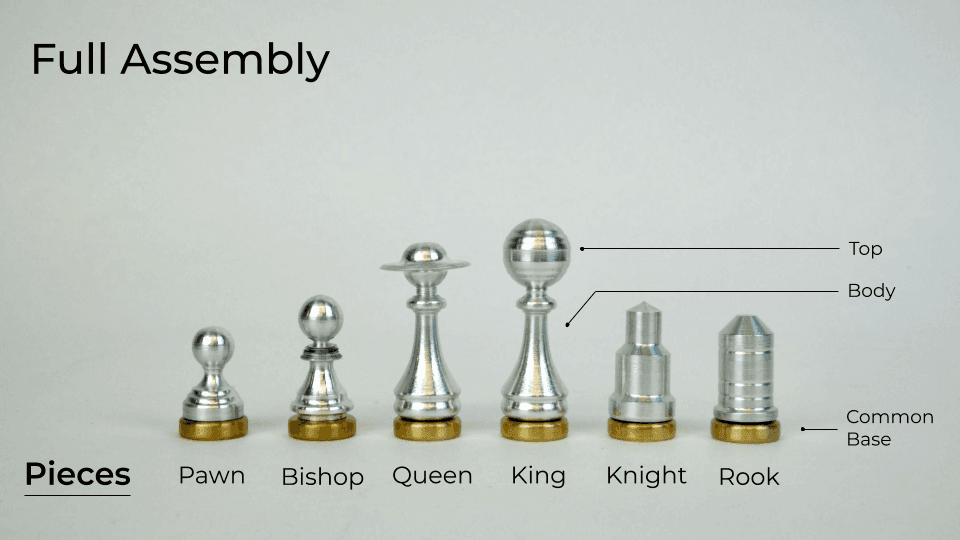
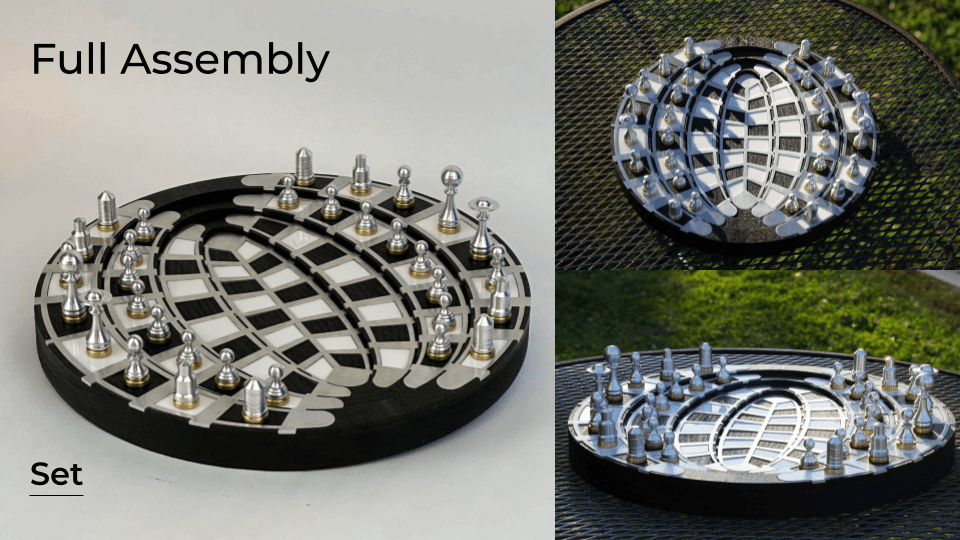
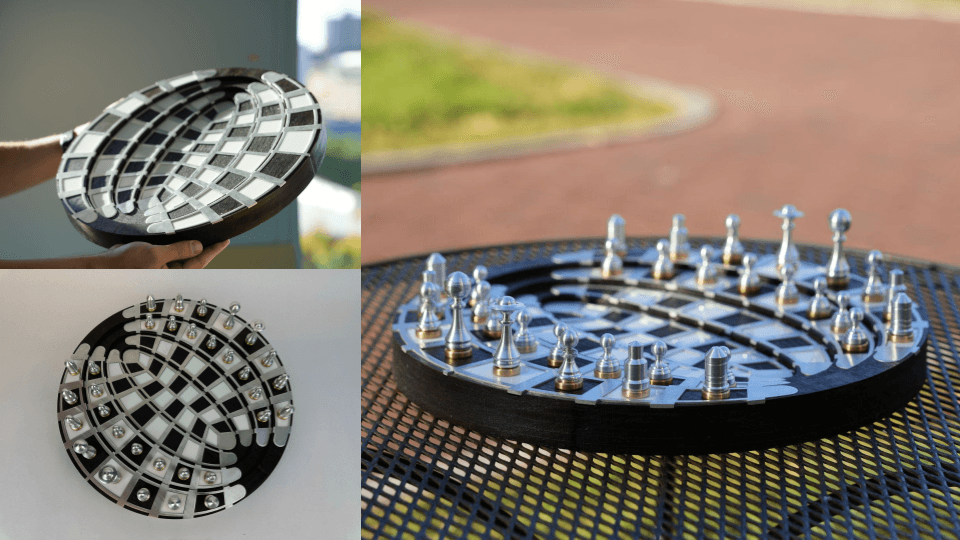
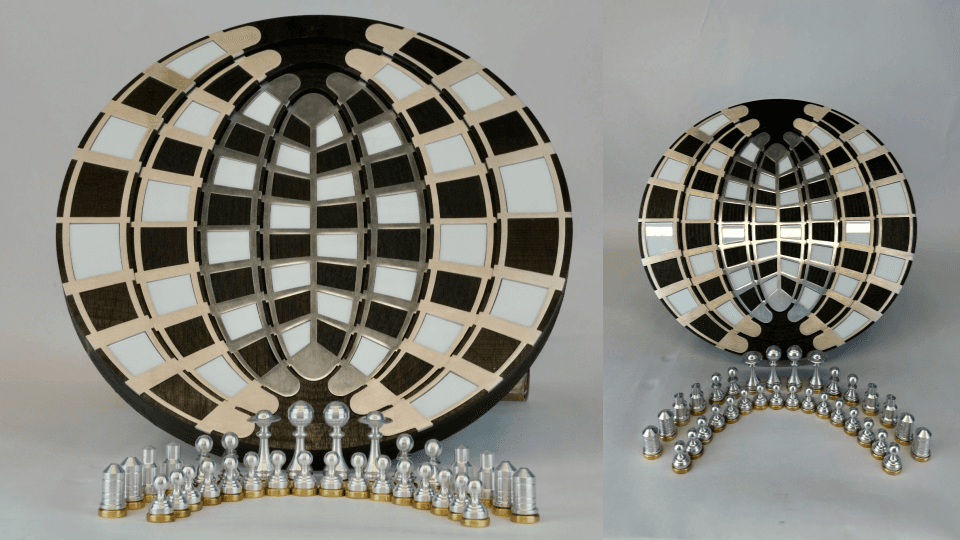
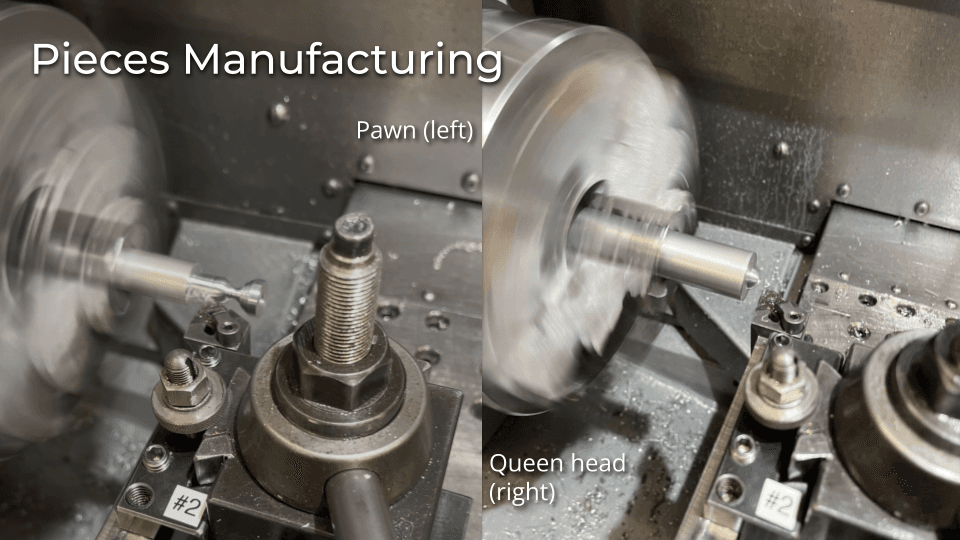
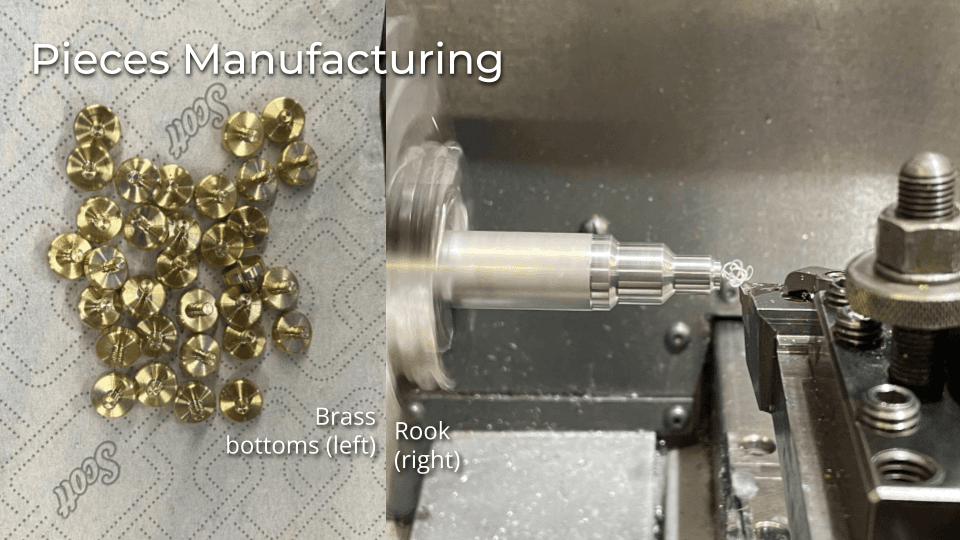
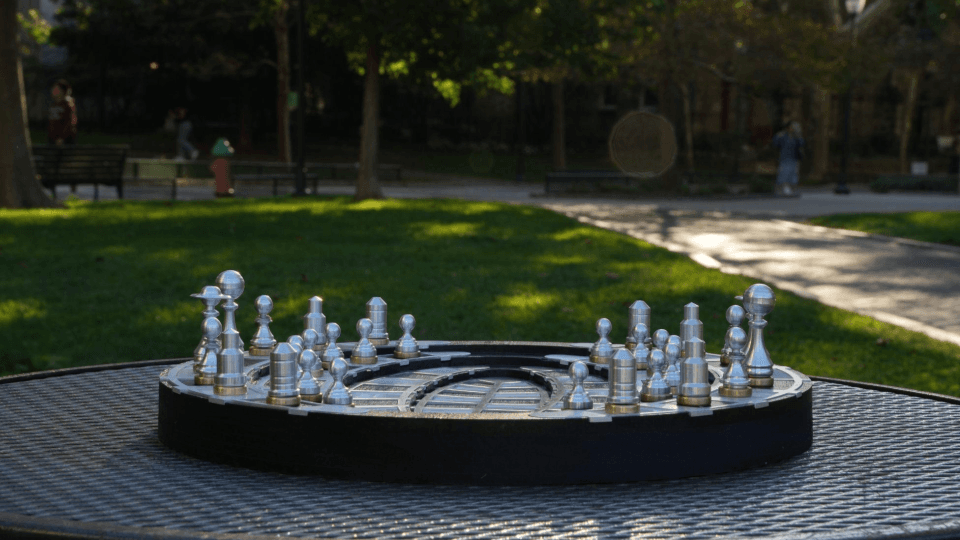
Each piece is a three-part assembly: a common aluminium base, a turned body, and a top that changes per piece type. We turned everything on the Haas TL-1. The brass bottoms give them real weight when you pick them up. For the light set we laser-cut white acrylic crowns; the dark set went through anodization which gave them this really satisfying uniform black. Getting the threading right took a few iterations, we had to add height and adjust diameters before the tap and die would work reliably.
The board
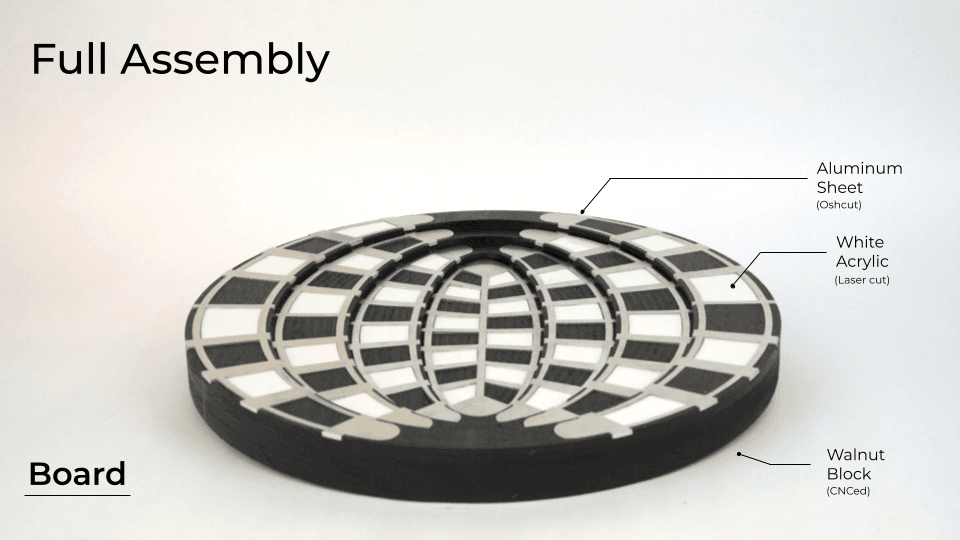
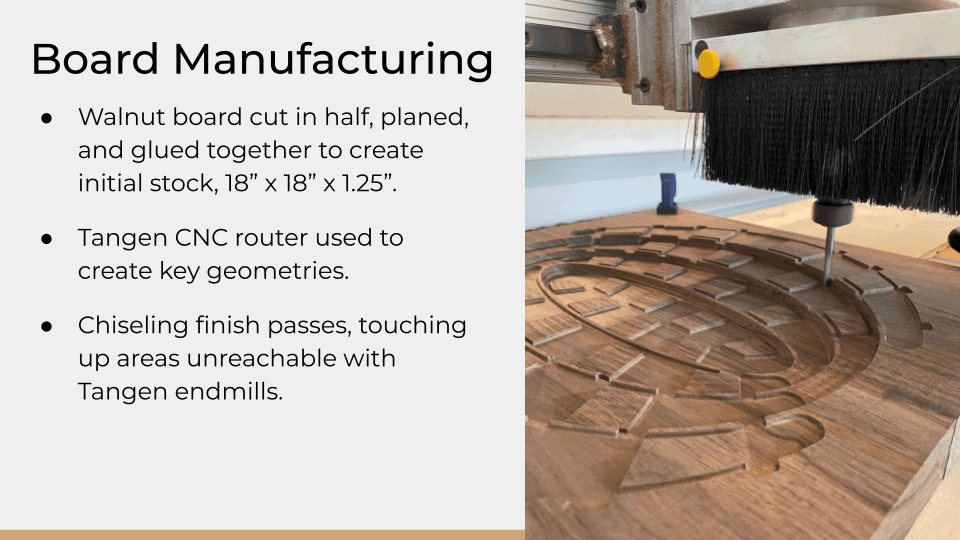
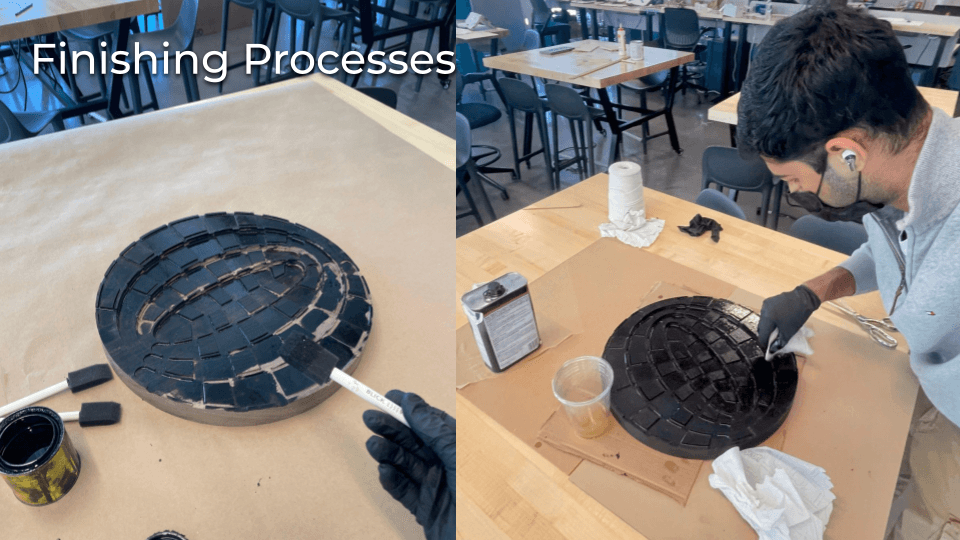
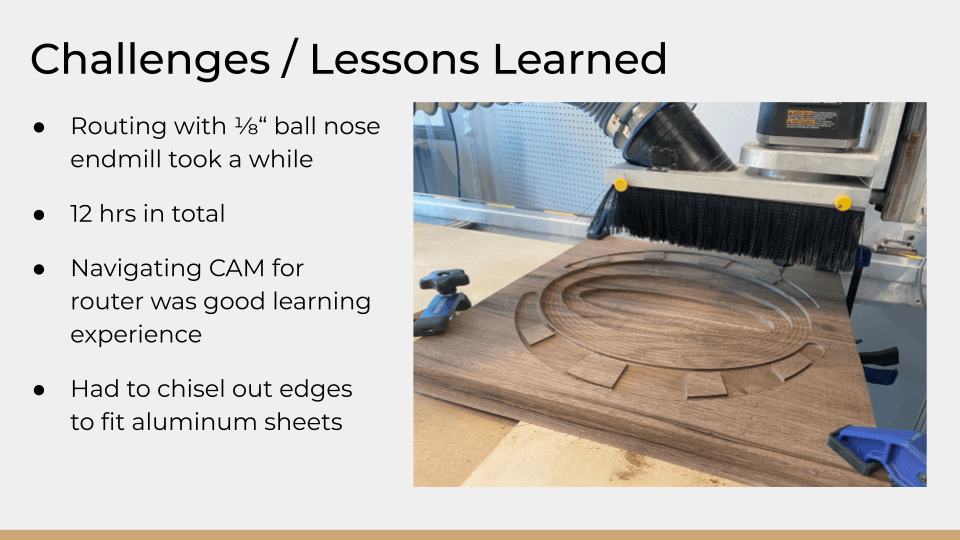
We glued up walnut stock, planed it flat, then ran it through the Tangen CNC router to cut the square grid and border geometry. The routing alone took about 12 hours with a ⅛" ball nose end mill. The edges where the aluminium sheets sit had to be hand-chiselled to get a clean fit. Finished it all with stain and a coat of sealant.
What I learned
CAM for a router is a different beast from lathe work. We had to split the roughing into sections to avoid stressing thin areas, and I learned the hard way that engraving depth needs to account for how much material you lose when deburring. Overall though, getting to work across that many processes in one project was exactly the kind of hands-on learning I came to Penn for.