
01
Context beats structure
People learn best when language shows up in a context they understand, not when the curriculum says it's time.
Role
Product strategy, UX, mobile app build
Stack
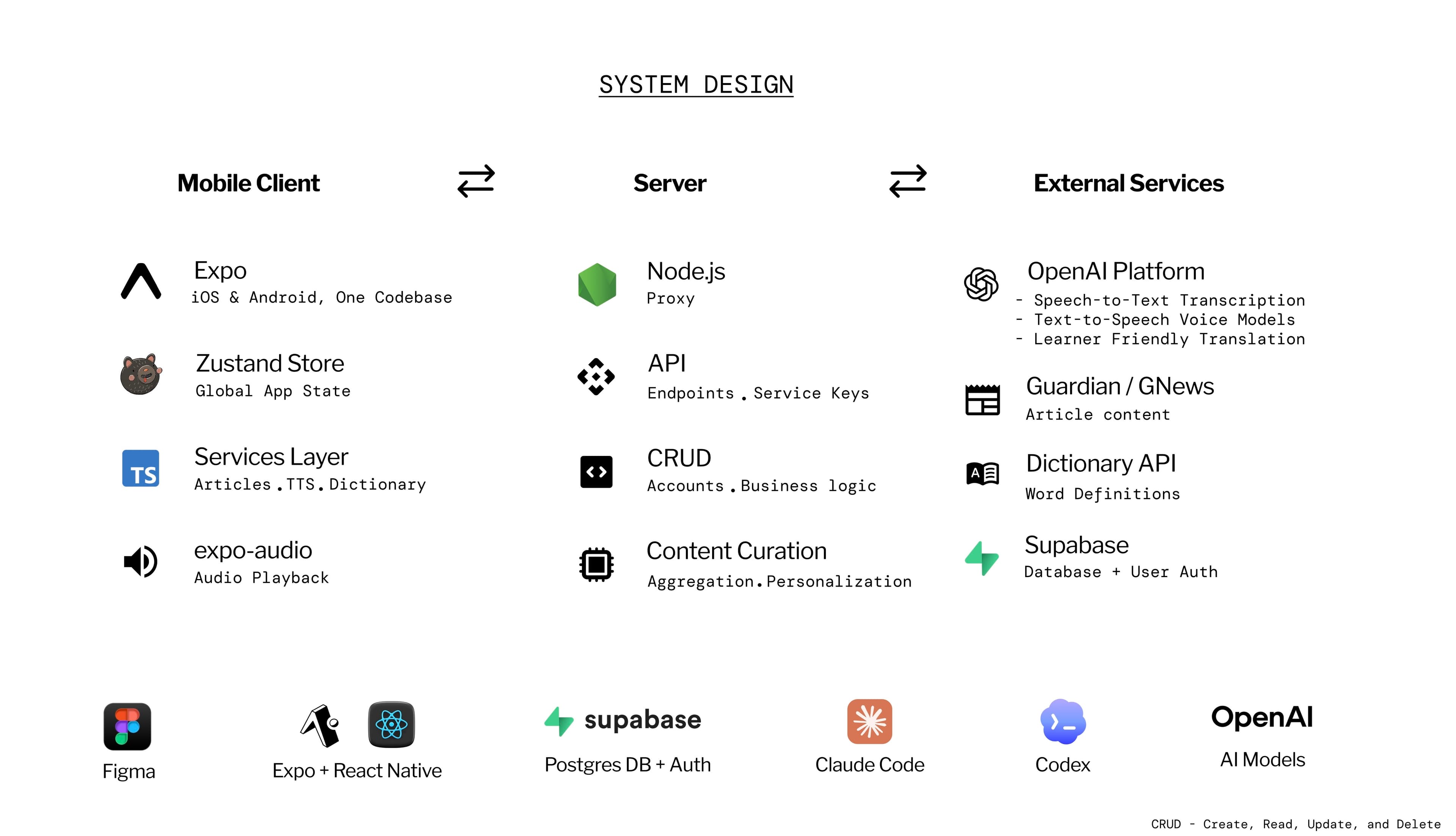
Expo, React Native, Node.js, Supabase, OpenAI
Validation
16-user cohort + expert ESL feedback
Codebase
~12,300 lines across mobile and backend
More than two billion people are learning a second or third language, but many still struggle to use it confidently in real moments.
“I can read the words, but when it's time to talk, my head goes blank.”
“Duolingo taught me to say - I'm a tired doctor.
When would I ever say that?”







Popular apps studied
People learn best when language shows up in a context they understand, not when the curriculum says it's time.
Fluency grows from comfort, not perfection. Fear of embarrassment was the single most repeated blocker.
Culture is inseparable from language. Apps teach correctness; people crave meaning.
Living where the language is spoken · Conversing regularly with native speakers · Integrating the language into daily routines · Watching shows in the target language
The research gave us three bets to test: practice should come from real context, content should be personally meaningful, and speaking should feel safe before it feels polished.
Direction 01
The strongest learning moments came from context learners already understood: the places they moved through, the media they consumed, and the routines they repeated.
turn everyday browsing into short lessons, which became the LangLearn prototype
make café chatter, signs, and videos feel like practice material, later explored through Verba
let learners practice real situations like ordering food or making calls before they happen
Direction 02
Learners did not want more abstract drills. They wanted language attached to culture, interests, and stories that made the words worth remembering.
small lessons around idioms, humor, and customs from media learners already watch
show how one word changes meaning across articles, videos, and everyday contexts
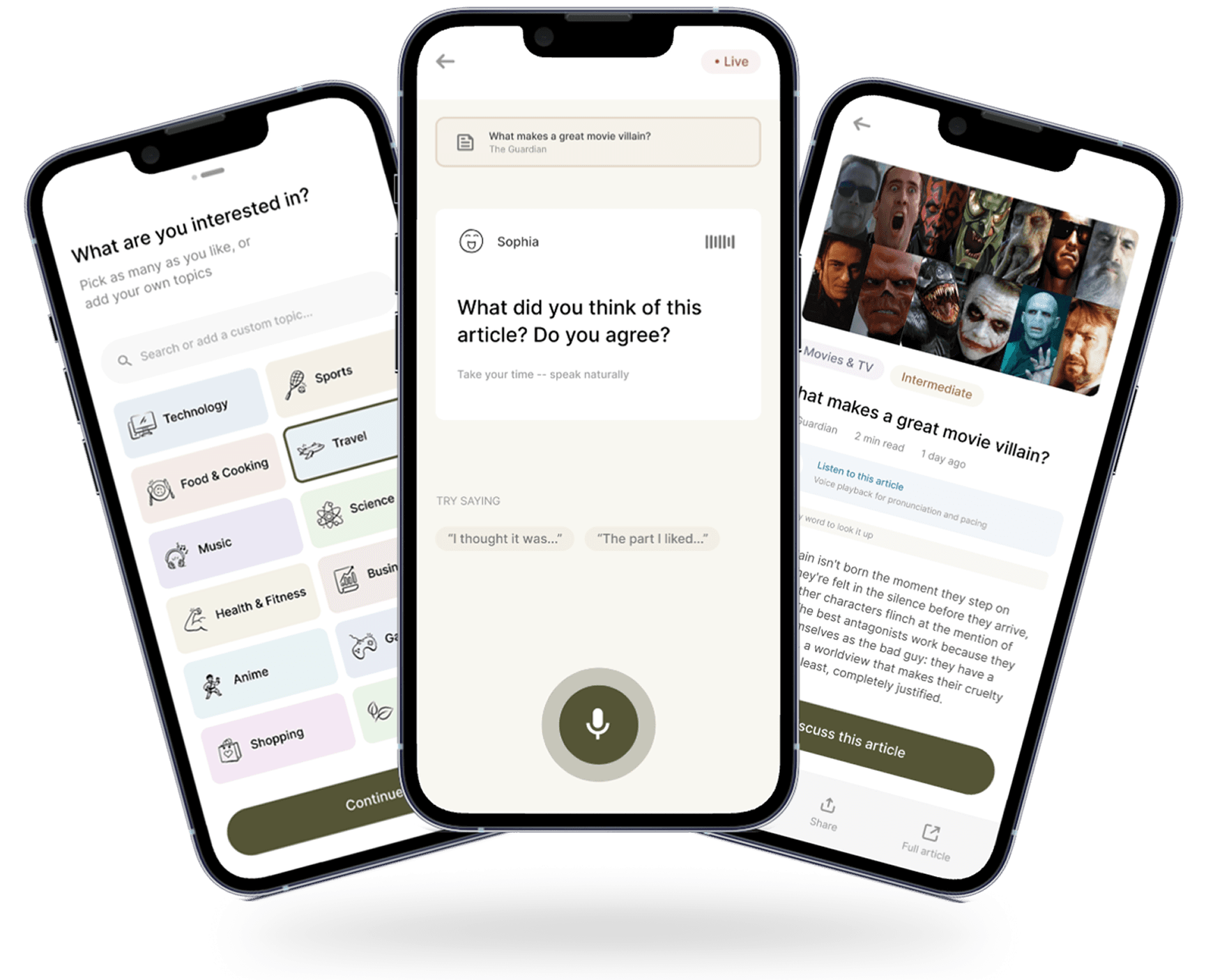
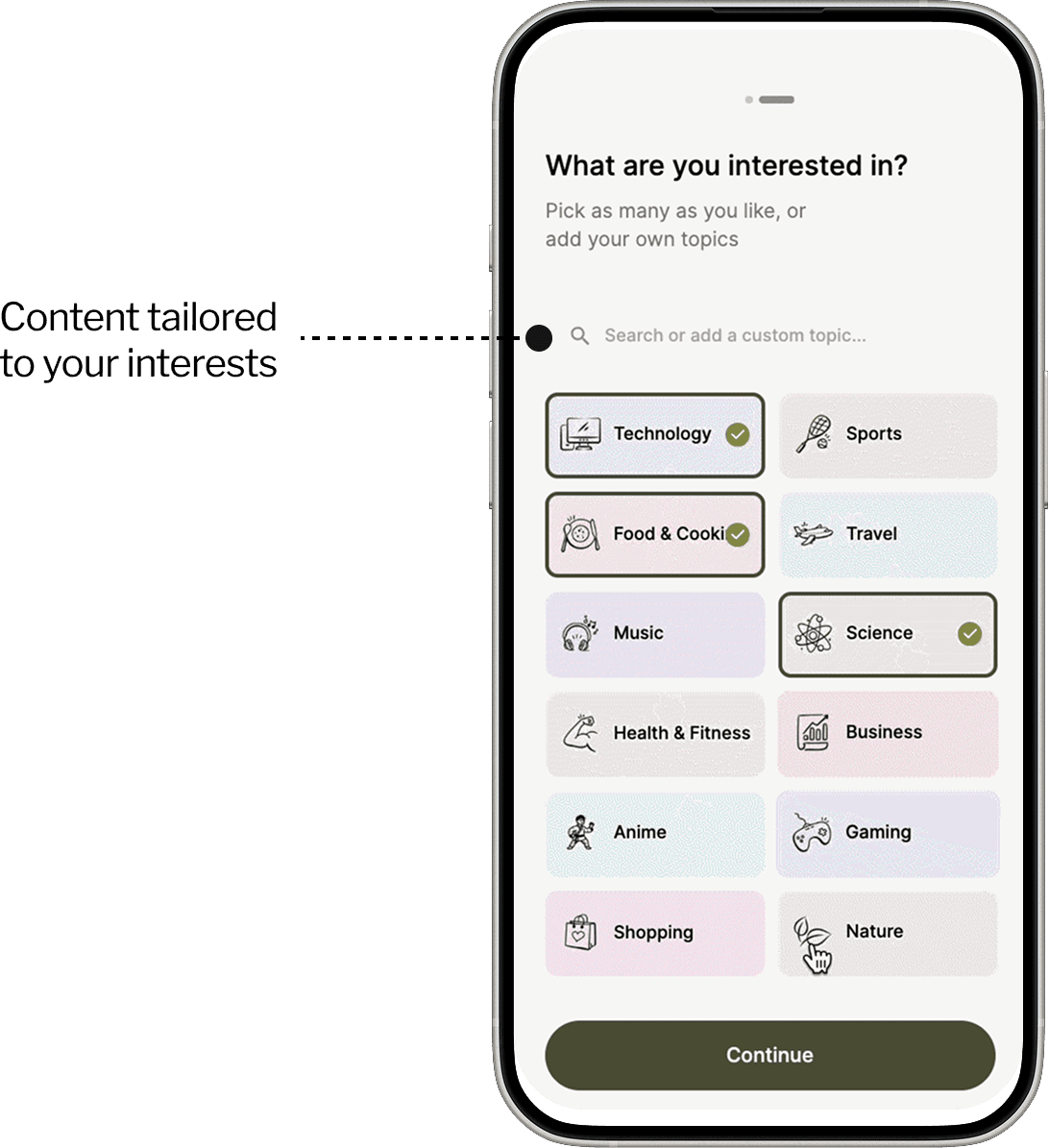
let learners choose topics first, which became the backbone of SpeakEasy's article feed
Direction 03
Almost every learner described the same gap: they could recognize words, but froze when they had to speak. The product needed rehearsal without embarrassment.
surface small prompts during real-world moments, an early path we chose not to pursue
natural conversation with gentle feedback, first tested in Verba and later carried into SpeakEasy
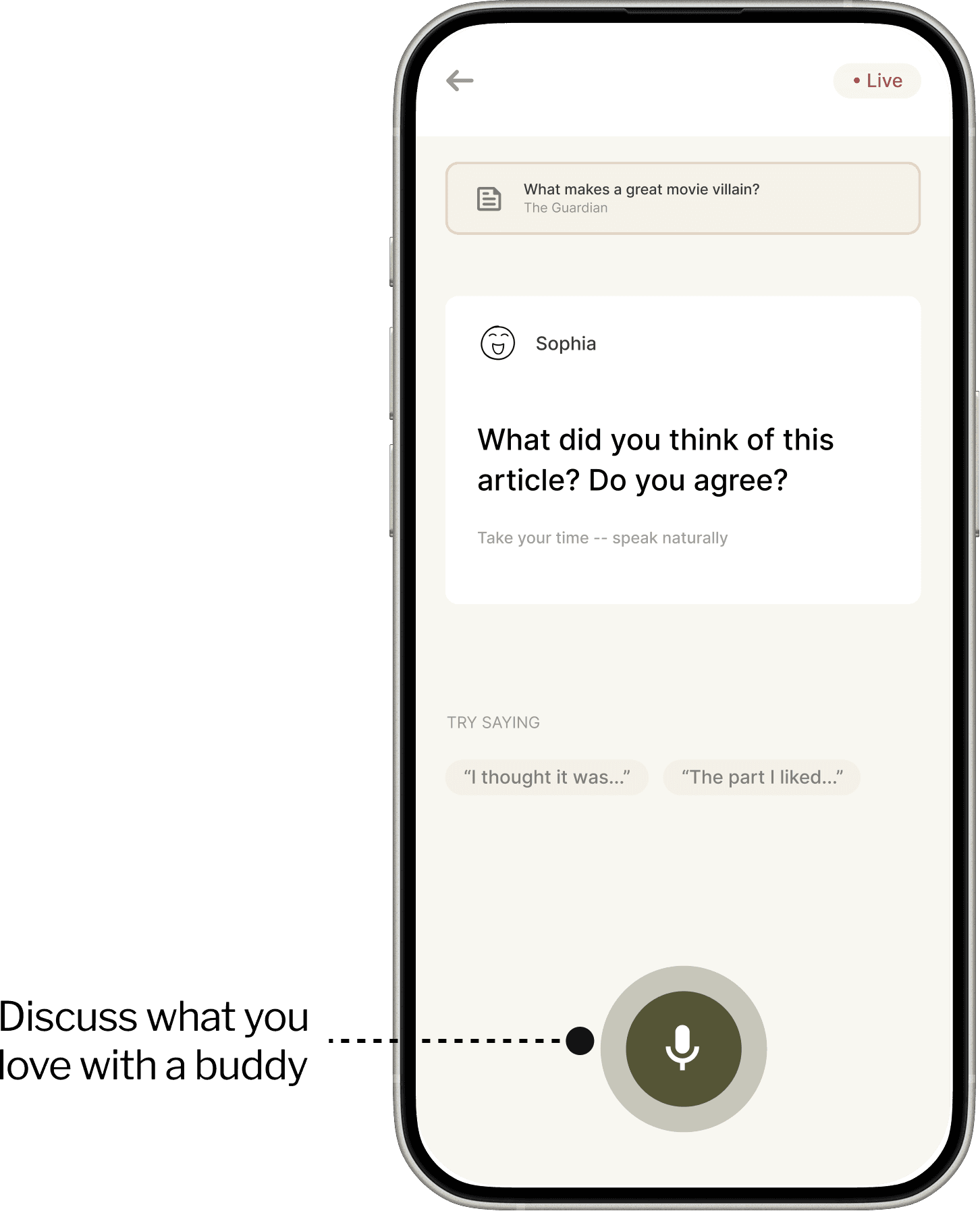
turn something the learner just read into a focused spoken conversation
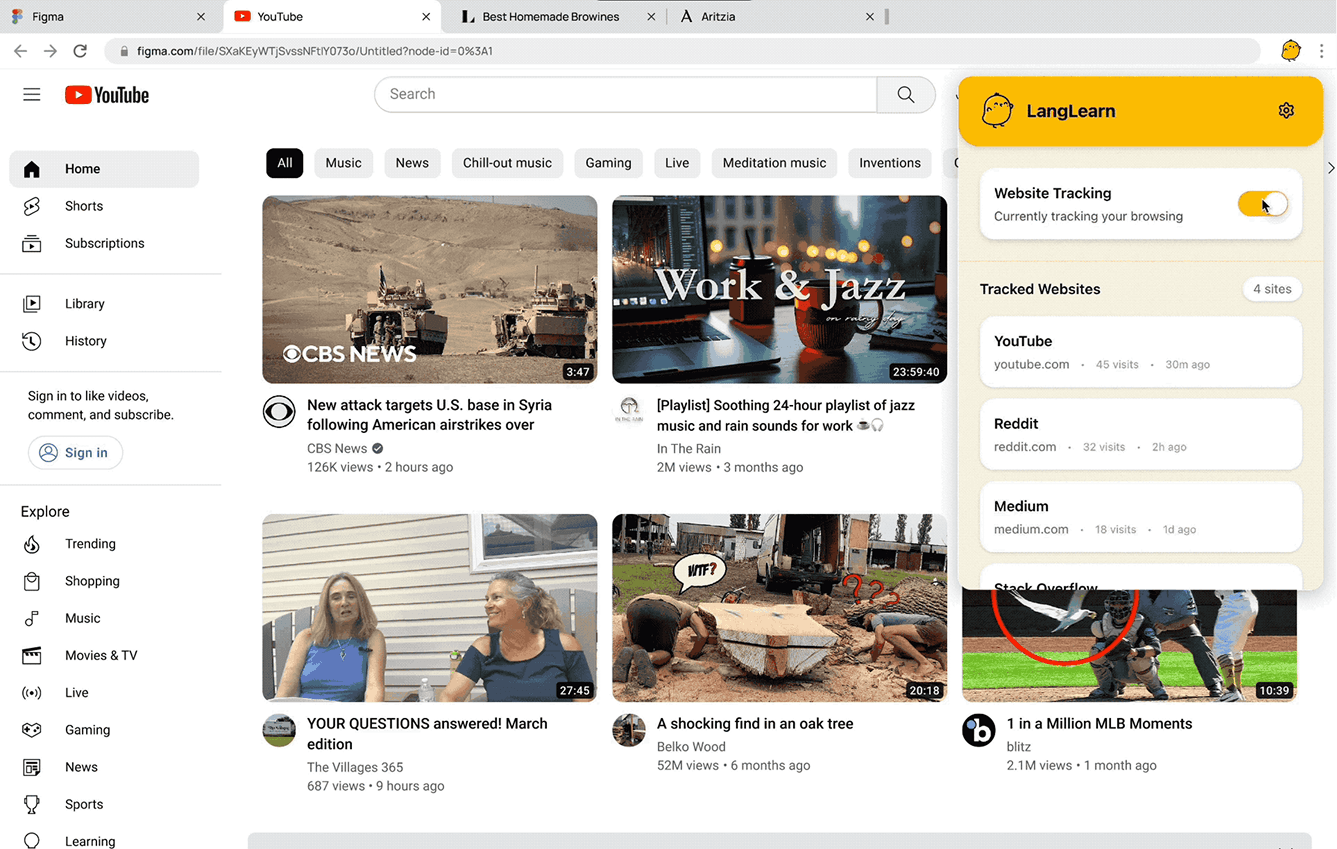
We saw some existing solutions people used were Chrome extensions such as a few which modifided the text users read in different language or gave quick learning tools on any website. So we decided to build a Chrome extension that pulled real vocabulary and phrases from your everyday browsing, then turns them into personalized lessons on mobile.
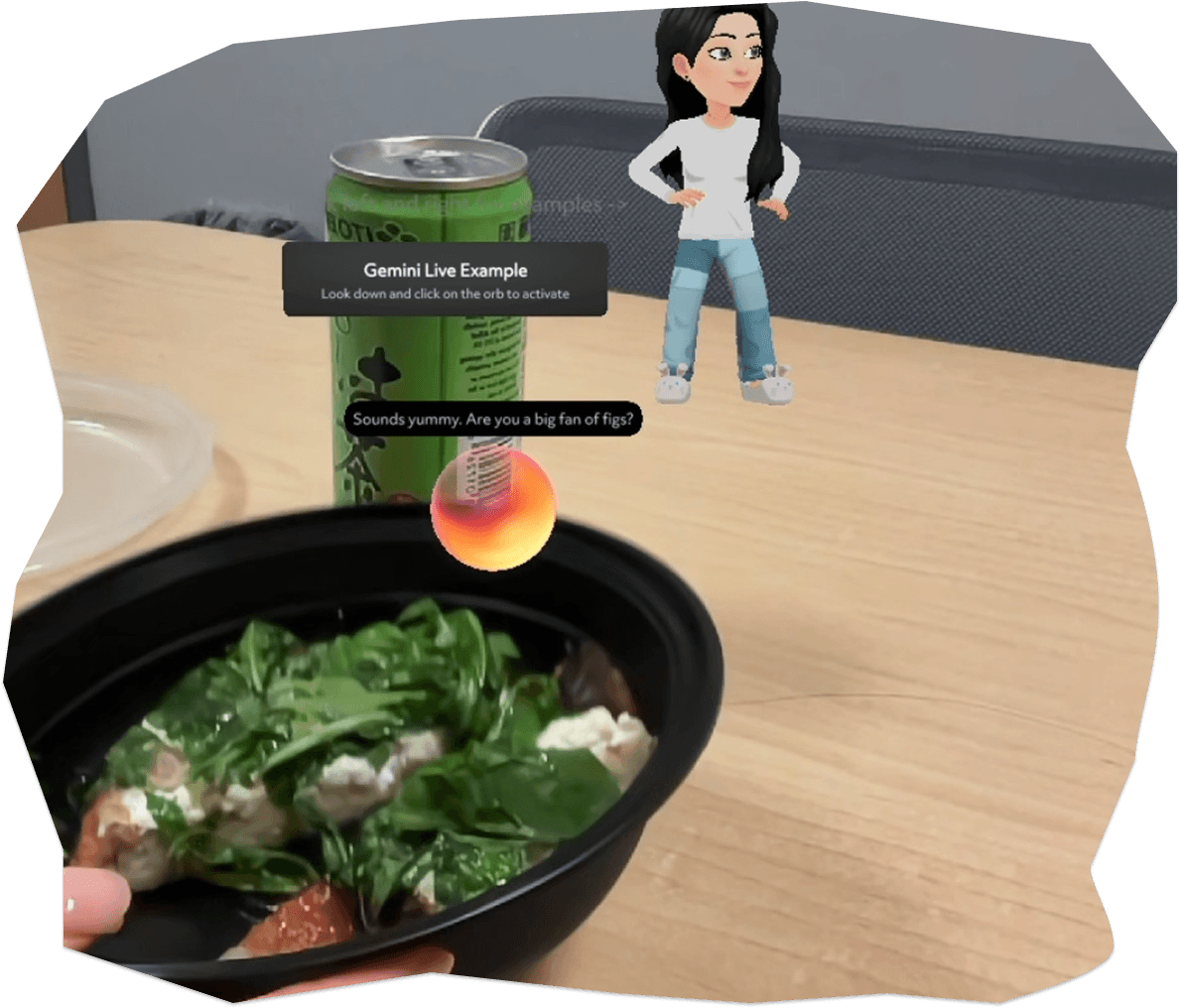
My teammate Jenn(seen in the picture below) owned a pair of Snaptacles from Snap so we decided to develop something using it. Idea was AR smart-glasses that see what you see bringing in context for practice in your target language. Mini lessons help build confidence at the right moments.
After testing LangLearn and Verba, the direction got clearer. People liked practice that came from things they already consumed, but the product had to live somewhere familiar, private, and easy to return to.
What the prototypes taught us
Users responded to practice built around articles, videos, and daily browsing because it already had context.
The browser extension felt useful but too heavy. People expected learning to fit into phone-sized moments.
Verba made the interaction feel alive, but smart glasses were not something most people owned or trusted yet.
The buddy-style conversation was the part users kept coming back to: low-stakes, personal, and close to real speaking.
Pivot
A smaller,more believablehabit.
Content first, practice second, no new hardware or classroom schedule required.
The final app became a simple learning loop: choose something worth reading, get help when stuck, then practice speaking about it.
Content feed
Learners start with topics they care about, so every article has context before the lesson begins.
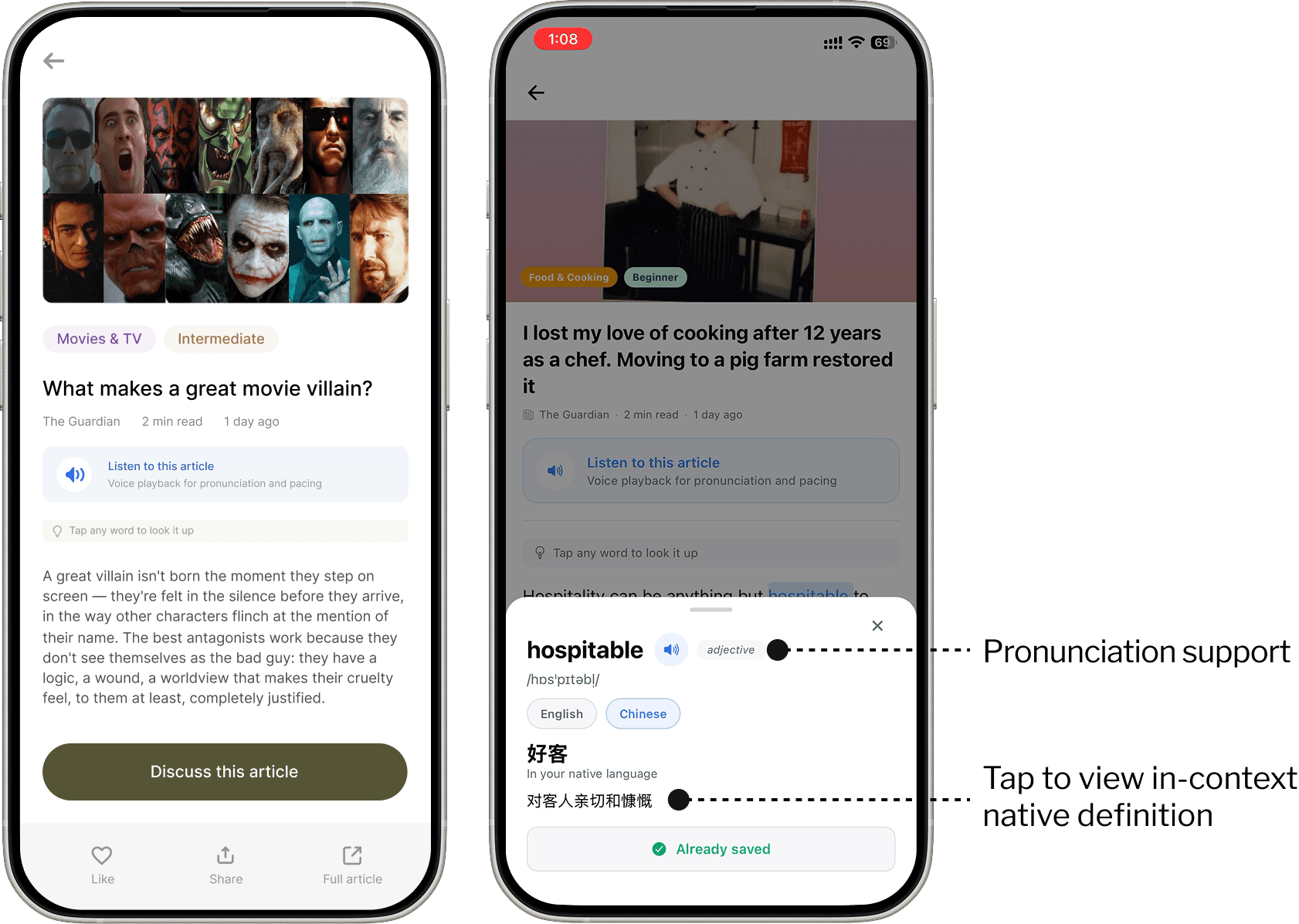
Vocabulary support
A tap brings up pronunciation and native-language meaning without leaving the article.
Voice discussion
The AI buddy turns the article into one focused, low-stakes conversation.
System design
Download now
App Store


Play Store